
Your pool heater clicks on, runs for about ninety seconds, and shuts off. You try again an hour later. Same thing. Meanwhile the water sits at 68 degrees and your kids have already asked twice when it will be swimmable again. In Houston, Pool Heater Repair calls spike every November for one reason: heaters that worked fine in September get their first real workout when the air drops into the 50s, and that is when weak igniters, tired pressure switches, and clogged filters finally fail. Most no-heat problems trace back to five causes, and three of them you can diagnose yourself in under twenty minutes with nothing but a garden hose and a volt meter.
Cause #1: Failed Heating Element or Igniter (How to Test and What Replacement Costs)
Gas heaters do not have a heating element the way an electric water heater does. They have an igniter, a burner tray, and a heat exchanger. When someone says their pool heater needs a new heating element, nine times out of ten they mean the igniter, and that is the single most common no-heat failure Pool Bros technicians find on Houston gas heaters.
Here is the test. Turn the heater on and stand within a few feet of it. You should hear a click, then a soft whoosh as the burners light, usually within 10 to 20 seconds. If you hear clicking for 30 seconds or more and never get the whoosh, the igniter is either not sparking or the gas is not reaching the burners. If you get the whoosh and the flame lights but dies within a few seconds, the igniter is fine and you have a flame sensor or gas supply problem.
Replacement costs in the Houston area typically run $150 to $350 for a hot surface igniter on a standard Pentair or Hayward unit, parts and labor included. A full burner tray rebuild, which you need when the burners are rusted through from years of humidity, runs $600 to $1,100. Heat exchangers, the big ticket item, run $1,200 to $2,400 and usually only make sense on a heater under eight years old.
One thing to check before you call anyone: look at the heater's display panel. Modern heaters throw a diagnostic code, and codes like "IF" or "IGN" on a Pentair MasterTemp mean ignition failure, while "HS" means the high limit switch tripped. Write the code down. A technician who knows what code you have can often bring the right part on the first visit instead of the second.

Cause #2: Low Water Flow or Clogged Filter (Why Your Heater Shuts Off Before It Warms)
A pool heater has a flow switch or a pressure switch that will not let the burners fire unless water is moving through the heat exchanger at a minimum rate, usually around 20 to 40 gallons per minute depending on the model. That is a safety feature. Without adequate flow, the heat exchanger overheats and cracks, and a cracked heat exchanger means a new heater.
So when a heater fires up, runs for a minute or two, and shuts down, the first thing to check is not the heater at all. It is the filter. A cartridge filter that is 80 percent loaded with Houston's fine dust and pollen can drop flow enough to trip the switch. Backwash a sand or DE filter, or pull and hose off the cartridges, then restart the heater. If it stays lit and heats normally, your "heater problem" was a $0 filter problem.
Other flow culprits, in order of likelihood:
- A dirty pump basket or skimmer basket. Check these first. Thirty seconds of work.
- A partially closed valve on the return side that someone bumped while cleaning.
- A clogged impeller in the pump, which you can often hear as a rattling or grinding sound.
- A failing pump that is moving water but at reduced volume. If the pump is 8 or more years old, this is worth suspecting.
Here is the honest part: if cleaning the filter fixes it, you do not need a repair call. You need a maintenance schedule. Pool Bros runs weekly Pool Maintenance visits across Houston, Katy, and Sugar Land specifically because a clean filter prevents more heater shutdowns than any single repair. If you are cleaning your filter once a month already and the heater still short cycles, that is when you call for pool heater repair.
Cause #3: Gas Supply or Pressure Problems (Warning Signs and When to Call a Pro)
Pool heaters are gas hogs. A 400,000 BTU heater pulls a serious volume of natural gas, and it needs steady pressure to stay lit. Houston's older neighborhoods, especially around Bellaire, Pasadena, and Deer Park, have gas lines and regulators that were sized for a house, not a house plus a 400,000 BTU appliance running for six hours a day.
Warning signs of a gas supply problem:
- The heater lights, roars loudly, then shuts off after 30 to 60 seconds. That roar is often a sign of overpressure or an improperly adjusted regulator.
- The heater works fine in the morning but fails in the evening when the furnace, water heater, and stove are also running. That is a volume problem, not a heater problem.
- You smell gas near the heater. Stop. Turn off the gas valve at the heater, ventilate the area, and call your gas utility first, then a technician. Do not troubleshoot this yourself.
- The heater has never run right since it was installed. That points to a gas line sized too small for the unit.
Gas pressure testing requires a manometer and a licensed technician, and in Texas any work on the gas line itself typically requires a licensed plumber. This is one of the few jobs where you should not try to save money. A technician will test static and dynamic pressure at the heater's gas valve inlet, and the spec is usually 4 to 7 inches of water column for natural gas. If you are below that, the fix might be a regulator adjustment, or it might be a new gas line. Pool Bros technicians carry the test equipment to tell you which, and they will tell you straight if the job needs a plumber instead.
Cause #4: Faulty Thermostat or Pressure Switch (Simple Diagnostics Houston Homeowners Can Do)
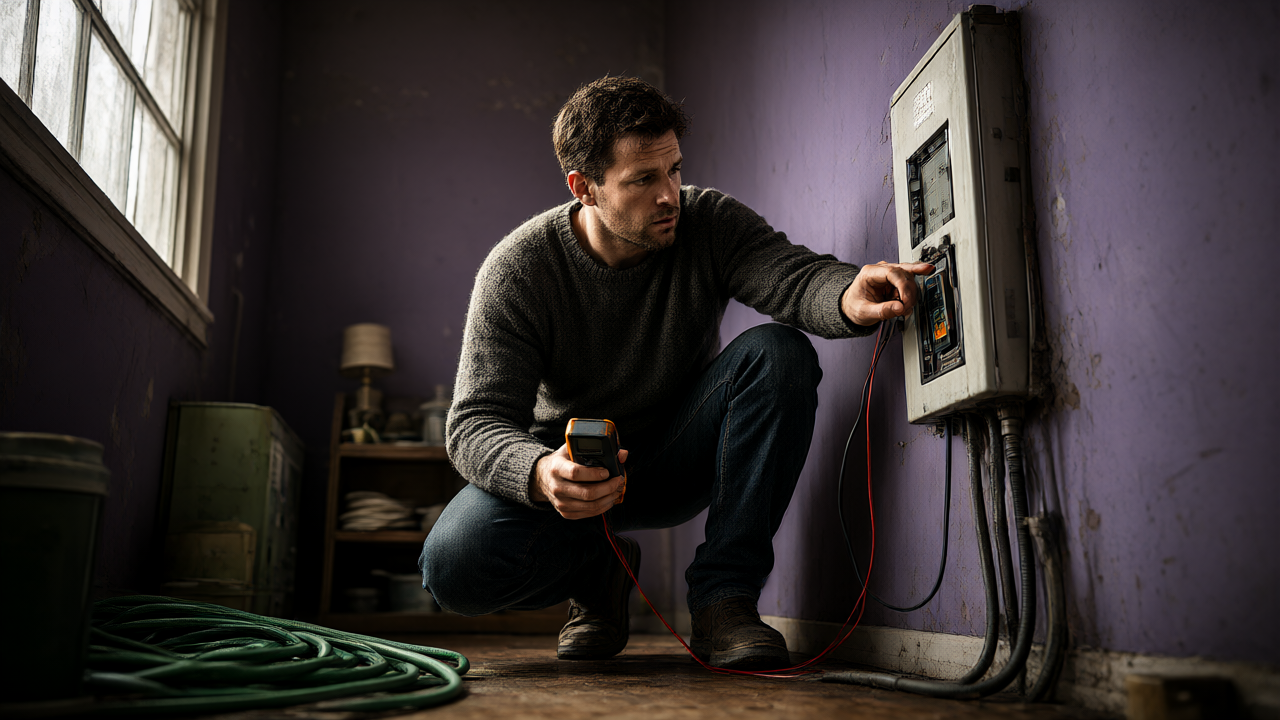
Two small, cheap parts cause a surprising share of no-heat calls: the thermostat and the pressure switch. Both are under $100 in parts, and both are diagnosable at home with basic tools.
Thermostat test: Set the heater to its highest temperature and watch the display. If the display reads the set point but the heater never fires, the thermostat or its sensor is likely bad. If the display reads a temperature far off from reality (say, 140 degrees when the water is 70), the sensor is bad. Thermistors run $40 to $90 and take about 15 minutes to swap on most Pentair and Hayward models.
Pressure switch test: This is the part that tells the heater water is flowing. When it fails, the heater will not fire at all, or it will fire and shut off immediately. On many heaters you can jumper the pressure switch temporarily to test it, but only do this for a few seconds, with the pump running, and never leave it jumpered. If the heater fires with the switch jumpered and does not fire without it, you have found your problem. The switch itself is $30 to $70 and takes 10 minutes to replace.
Pool Bros founder Bryan Ezzell, a Certified Pool Operator who has been diagnosing Houston heaters for more than seven years, puts it this way: "Half the no-heat calls we run in November are a $50 part. The other half are a $50 part plus a filter that has not been cleaned since August. Customers are usually relieved, but I always tell them what the part actually costs before I quote the ticket. Nobody likes finding out later they paid $400 for a $50 thermistor."
If you are handy and comfortable with a multimeter, replacing a thermistor or pressure switch yourself is a reasonable DIY job on most heaters. If the heater is under warranty, call the manufacturer's authorized service instead. Opening the unit yourself can void it.
Cause #5: Heat Pump Defrost or Compressor Issues (Why Houston Humidity Makes It Worse)
Heat pumps work differently from gas heaters. They move heat from the air into the water instead of burning fuel, which is why they are popular in Houston where winter air rarely drops below freezing. But Houston's humidity, often 70 to 90 percent even in November and December, creates a specific problem: condensation freezes on the evaporator coil.
Every heat pump has a defrost cycle that runs periodically to melt that ice. When the defrost sensor or board fails, ice builds up on the coil, airflow drops, and the unit stops heating. You will usually see a visible ice layer on the coil or hear the fan running but feel cold air coming off the top of the unit. A failed defrost sensor is typically $200 to $450 installed, and a control board is $400 to $800.
Compressor problems are more serious. If the compressor is failing, you will often hear a loud hum, a clicking sound, or the unit will trip its breaker repeatedly. Compressor replacement on a heat pump usually runs $1,200 to $2,200, which is close enough to a new heat pump that most Houston homeowners replace the unit once it is past 10 years old.
One quick check: on a heat pump, feel the air coming out of the top of the unit. It should be noticeably cooler than the ambient air, because the unit is pulling heat out of it. If it feels the same as the air around it, the compressor is likely not running. If it feels warm, the unit is running in defrost mode, which is normal for a few minutes at a time.
Heat pump issues are the one category where you should call a professional early. Refrigerant work requires EPA Section 608 certification, and Pool Bros senior technician David Rivas holds that certification along with his PHTA service technician credential. Refrigerant is not a DIY job, and attempting it can cost you a compressor.
Frequently Asked Questions
How much does pool heater repair cost in Houston?
Most repairs land between $150 and $500 for a single failed part like an igniter, thermistor, or pressure switch, including the diagnostic visit. Gas pressure work, heat exchanger repairs, and heat pump compressor issues run higher. Pool Bros offers a diagnostic visit that identifies the exact problem and quotes the repair before any work begins, so you know the number before you commit.
Is it worth repairing a pool heater or should I replace it?
If the heater is under 8 years old and the repair is under $800, repair almost always wins. Past 10 years, or if the repair is a heat exchanger or compressor, replacement usually makes more financial sense, especially with the efficiency gains in newer units. The honest answer depends on what the diagnostic testing shows, not on a rule of thumb.
Why does my pool heater keep short cycling?
Short cycling almost always points to a flow problem or a pressure switch issue. Dirty filters, a clogged pump basket, and low water flow are the top three causes. Clean the filter first, then check the pump basket, and if the problem continues, call for pool heater repair. A short cycling heater left running can crack the heat exchanger.
Can I repair my pool heater myself?
Yes for simple parts like thermistors, pressure switches, and igniters if you are comfortable with a multimeter and the heater is out of warranty. No for gas line work, refrigerant, or anything involving the heat exchanger. Those require licensed or certified technicians, and getting it wrong can mean a much bigger bill.
If you are in Houston, Katy, Sugar Land, or anywhere around Beltway 8 and your heater is doing any of the above, Pool Bros handles pool heater repair as a core service. Their technicians carry diagnostic equipment and common parts on the truck, which means most repairs get done in one visit instead of two. Give them a call and tell them what you have already checked. They will tell you straight whether it is a filter you can clean yourself or a part that needs a real repair.


