

The average Houston pool sees more debris before noon than most people realize, and much of it never rises to the surface. Live oak catkins, pine needles, and fine silt from the Gulf Coast humidity sink straight to the floor, where they break down invisibly. By the time the water turns, the damage is often already inside your pump and filter. Pool Cleaning in Houston is less about what you scoop out and more about what you catch before it becomes a $1,200 repair.
The Debris You Can't See: Why Houston Pools Hide More Than Leaves
Houston's climate is a perfect trap for submerged debris. Between the live oak pollen season from February through April, the pine needles that drop all summer, and the fine windblown dirt that comes with our afternoon thunderstorms, a pool can collect a quarter inch of silt on the floor in a single week. That layer looks harmless from the patio. Underwater, it is a living filter that traps chlorine, feeds algae spores, and grinds against every surface it touches.
Pool Bros founder Bryan Ezzell, a Certified Pool Operator with more than seven years in Houston water chemistry, puts it plainly: "The pools we see fail are usually not the dirty ones. They are the ones where the homeowner only skimmed and never vacuumed." Surface skimming catches maybe 30% of what enters your water. The rest sinks, and in a Houston pool with average summer water temperatures of 84 to 88 degrees, that sunken organic material decomposes fast, pulling oxygen out of the water and creating the ideal breeding ground for mustard algae and black spot.
Hidden debris also hides in plain sight. It collects in the skimmer baskets that get checked once a month instead of once a week. It settles behind the return jets where the current is weakest. And it packs into the impeller of your pump, where a single pine needle wrapped around the shaft can cut flow by 20% without any visible warning.
6 Warning Signs of Hidden Debris (Cloudy Water, Pump Strain, and More)
You do not need to drain your pool or buy a $400 underwater camera to find hidden debris. Your pool tells you through six signals, and most Houston homeowners notice at least one of them before they ever see the debris itself.
1. Water that stays cloudy after shocking. If you hit the pool with a full dose of chlorine and the water is still hazy 24 hours later, the sanitizer is being consumed by something solid, not just algae. Sunken leaves and fine silt can absorb two to three times the normal chlorine demand. A deep vacuum, not another shock, is what clears it.
2. The pump basket fills faster than usual. Check your pump basket every week. If it goes from clean to a quarter full in seven days, debris is bypassing the skimmer or breaking down into smaller pieces that slip through. A cracked skimmer basket, which costs about $25 to replace, is a common culprit.
3. Filter pressure climbs more than 8 to 10 PSI above clean baseline. A clean filter has a baseline pressure, usually between 10 and 20 PSI depending on your system. When that number creeps up week after week, the filter is working harder to push water through a clogged medium. Hidden debris is the most common reason.
4. You hear a grinding or rattling sound from the pump. Small debris like acorns, pebbles, or hardened calcium flakes can pass through the skimmer and reach the impeller. That grinding sound is the sound of a $150 to $300 impeller being chewed up. Turn the pump off and call a technician before it becomes a $900 motor replacement.
5. Chlorine demand spikes without a heat wave. If your pool suddenly needs two or three times the normal chlorine to hold a reading, and the weather has not changed, organic debris is decomposing somewhere in the system. Check the floor, the steps, and the corners behind the ladder.
6. Visible staining or a rough patch on the plaster. Leaf tannins stain plaster in as little as two weeks. A rough, pitted spot on the floor often means debris sat there long enough to etch the surface. Pool Resurfacing can fix it, but catching the debris early costs far less than a $4,000 to $8,000 resurfacing job.
How Hidden Debris Damages Filters, Pumps, and Plumbing
The repair math on hidden debris is unforgiving. Pool Bros technicians Joshua Naujokas and David Rivas, who together bring more than 24 years of Houston pool experience, see the same sequence of failures play out again and again. It starts small and compounds fast.
The filter is the first casualty. Cartridge filters are rated to capture particles down to 10 to 20 microns, but fine silt from Houston's clay soil can blind the pleats in a matter of weeks. A cartridge that should last three to five years gets replaced in 18 months. That is $150 to $300 per cartridge, or $800 to $1,200 for a full filter replacement, all because the floor was not vacuumed.
The pump is the expensive victim. Debris that reaches the impeller causes cavitation, which is the technical term for water vapor bubbles collapsing against the pump's internal surfaces. Cavitation pits the impeller, reduces flow, and forces the motor to run hotter. A pump that should last 10 years in a well maintained Houston pool often fails at year six or seven. A replacement pump runs $600 to $1,500 installed, depending on horsepower and variable speed features.
The plumbing suffers quietly. Debris that settles in the return lines or the main drain line restricts flow and creates dead zones where algae thrives. In severe cases, roots from Houston's fast growing trees find their way into cracked lines, and what started as a debris problem becomes a $2,000 to $5,000 excavation and repair. Pool Leak Detection can catch line damage early, but the cheapest fix is keeping debris out of the system in the first place.
"A pool that gets vacuumed and brushed every week will outlast the same pump, filter, and plaster by three to five years compared to a pool that only gets skimmed," Ezzell says. "The equipment does not fail from age. It fails from workload it was never designed to carry."
DIY vs. Professional Debris Removal: What Houston Homeowners Should Know
You can absolutely handle some of this yourself, and Pool Bros will be the first to tell you when a professional visit is not necessary. Here is the honest breakdown.
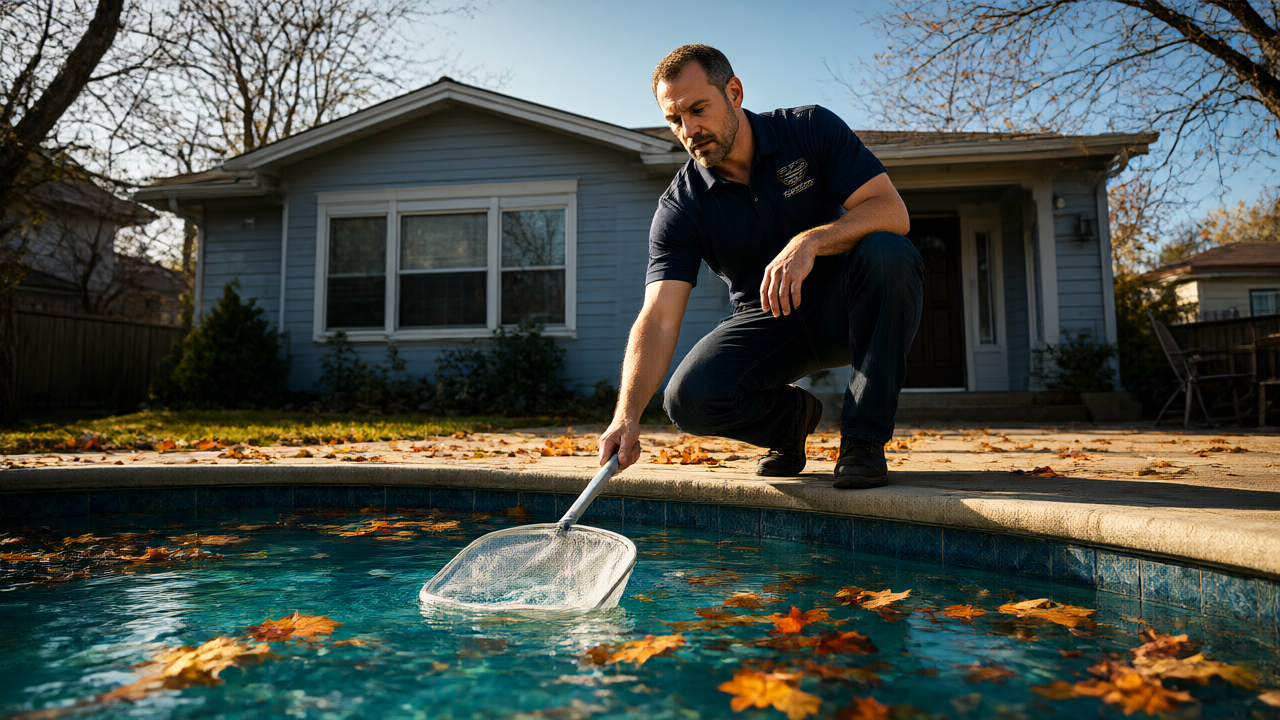
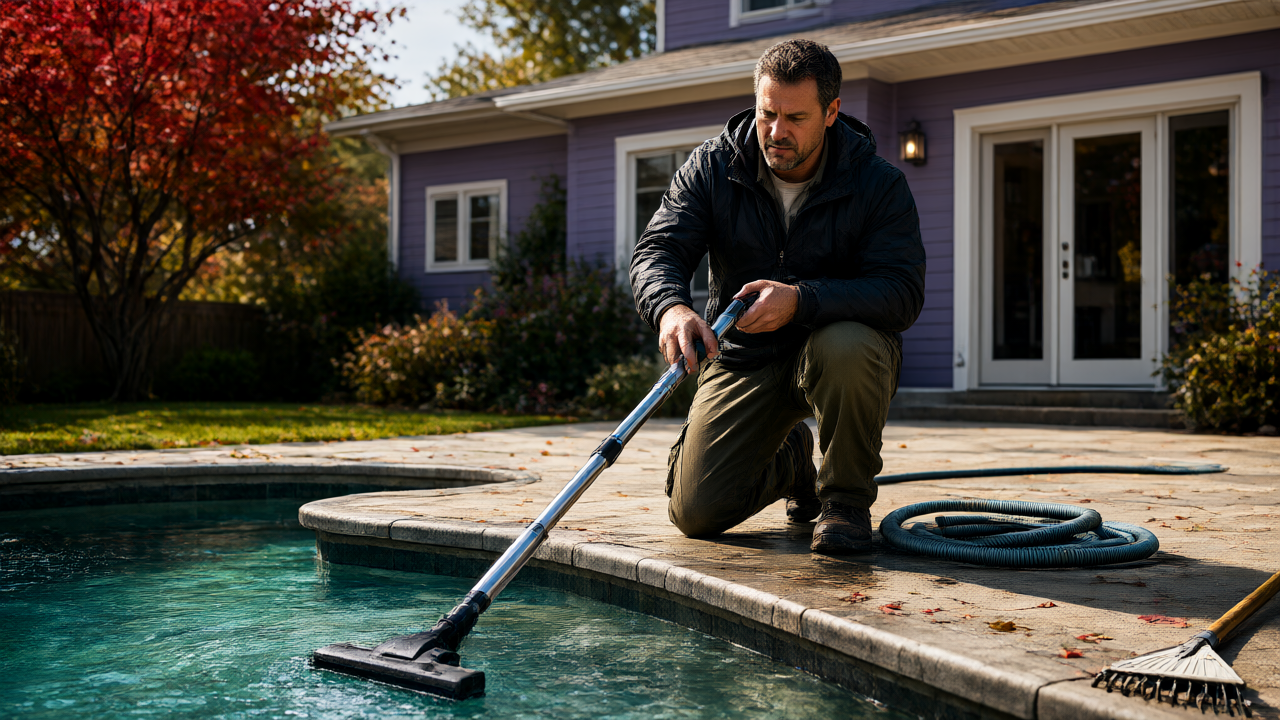
Do it yourself if: your water is clear, your filter pressure is stable, your pump basket stays mostly empty between weekly checks, and the debris is limited to leaves and insects on the surface. A quality skimmer net, a brush, and 20 minutes twice a week will keep a light debris load under control. You do not need a service for that.
Call a professional if: you see any of the six warning signs above, if the pool has been unattended for more than two weeks, if you have not vacuumed the floor in over a month, or if the water is green or cloudy. A one time deep clean and inspection from a company that handles Pool Cleaning in Houston typically runs $200 to $400, and it includes a full water chemistry test, a filter inspection, and a written report on equipment condition.
Ask three questions before you hire anyone: Are your technicians Certified Pool Operators? Do you test and balance water chemistry on every visit, or just skim? And will you tell me in writing what condition my filter and pump are in? A provider who cannot answer those three questions clearly is a provider who is guessing.
For homeowners in Baytown, Bellaire, Deer Park, and the surrounding areas, Pool Bros offers three service levels, from Essential Weekly Care to Premium Total Protection, so you can match the service to your pool's actual debris load rather than paying for a package you do not need.
Preventing Hidden Debris: A Seasonal Checklist for Houston Pools
Prevention in Houston is a year round job, but the work shifts with the season. This checklist is what Pool Bros technicians actually run through on service visits.
- Weekly (all year): Skim the surface, empty the skimmer baskets, check the pump basket, and brush the walls and steps. Brushing lifts debris that has settled so the filter can catch it.
- Weekly (all year): Vacuum the floor, or confirm your automatic cleaner is actually reaching the corners and the shallow end. Many cleaners miss the steps entirely.
- Monthly: Inspect the filter, note the pressure reading, and clean or backwash when pressure rises 8 to 10 PSI above baseline. Check the skimmer basket for cracks.
- February through April: Live oak pollen season. Increase skimming to three times a week and rinse the filter more often. Pollen is fine enough to pass through standard baskets.
- May through September: Storm season. After every major rain, skim and vacuum within 48 hours. Runoff carries fine silt and lawn chemicals into the pool.
- October through December: Leaf drop. This is when most hidden debris accumulates. Vacuum weekly and consider a leaf cover if your pool sits under trees.
One more piece of insider advice: do not rely on chlorine tablets alone to keep a debris heavy pool clear. Tablets maintain a residual, but they do not remove the organic load. The pool that gets brushed and vacuumed every week needs less chlorine, less acid, and fewer repairs than the pool that gets shocked every time the water turns.
If you are in Houston, Katy, Sugar Land, Missouri City, or anywhere in between and your pool has been showing any of these warning signs, Pool Bros handles exactly this kind of work. Call them, describe what you are seeing, and they will tell you straight up whether it is a quick vacuum and balance or something that needs a closer look at the equipment. That is the kind of answer that saves Houston homeowners money before the pump gives out.
Frequently Asked Questions
How much does pool cleaning cost in Houston?
Routine weekly pool cleaning in Houston typically runs $100 to $180 per month for basic service, while full service packages that include chemistry balancing and filter care run $200 to $350 per month. One time deep cleans for pools with heavy debris start around $200 and go up from there.
How do I know if my pool has hidden debris?
Watch for cloudy water that will not clear after shocking, filter pressure that climbs more than 8 to 10 PSI above normal, a pump basket that fills faster than usual, or a grinding sound from the pump. Any one of those signals is worth a professional inspection.
Can I just vacuum my pool myself instead of hiring a service?
Yes, if your water is clear and your equipment is running normally. A manual vacuum and brush routine twice a week handles light debris. If you see staining, cloudy water, or pressure problems, a professional deep clean and equipment check is the smarter move.
How often should a Houston pool be cleaned?
Weekly service is the standard for most Houston pools because of the year round pollen, storm runoff, and leaf drop. Pools under heavy tree cover may need twice weekly vacuuming during pollen and leaf season, even if chemistry service stays weekly.
If your pool has been cloudy, your filter pressure keeps climbing, or you have not seen the floor in a few weeks, do not wait for the pump to tell you. Pool Bros serves Houston, Baytown, Bellaire, Deer Park, Katy, Sugar Land, and the surrounding communities with honest assessments and same week scheduling. Give them a call and find out what is actually sitting under that water.


