Most Houston pool owners ignore their heater until the first cold snap hits, then panic when it won't fire up. But here's the counterintuitive truth: the mild winters around Houston are actually harder on your pool heater than a hard freeze in Dallas. Why? Because we run our heaters intermittently for months, cycling them on and off dozens of times a week, which stresses components in ways continuous operation never does. If you want to avoid a mid-December repair bill, you need to prep your system now, before the holiday guests arrive. This guide covers five winter prep checks for 2026, plus when to call a pro for Pool Heater Repair in Houston, Baytown, and Bellaire.
Why Houston's Mild Winters Still Stress Your Pool Heater
Houston's winter temperatures typically hover between 45°F and 65°F, with occasional dips into the 30s. That sounds easy on equipment compared to freezing climates, but the frequent cycling is the problem. Your heater might run for two hours in the morning, shut off at noon when the sun warms things up, then kick back on at 6 p.m. Each startup draws a surge of current through the ignition system, and each cooldown causes metal components to contract. Do that 20 to 30 times a week for four months, and you've racked up more thermal cycles than a Minnesota heater sees in a year of continuous use.
Another local factor: Houston's humidity. The air holds moisture that condenses inside the heater cabinet when it cools, especially if the unit sits in shade. That moisture corrodes electrical contacts, rusts burner tubes, and degrades the heat exchanger. I've seen heaters less than five years old with corroded terminals that look like they spent a decade on the coast. The combination of cycling and humidity means a little preventive attention in November goes a long way toward avoiding a $400 to $800 repair in January.
And don't forget our pollen and debris. Live oak and pine drop pollen in late winter, which clogs intake vents and burner screens. A clogged burner starves the flame, causing incomplete combustion and soot buildup. So before you fire up the heater for the season, clean the cabinet and check the vents.
5 Pre-Winter Heater Checks That Prevent Mid-Season Breakdowns
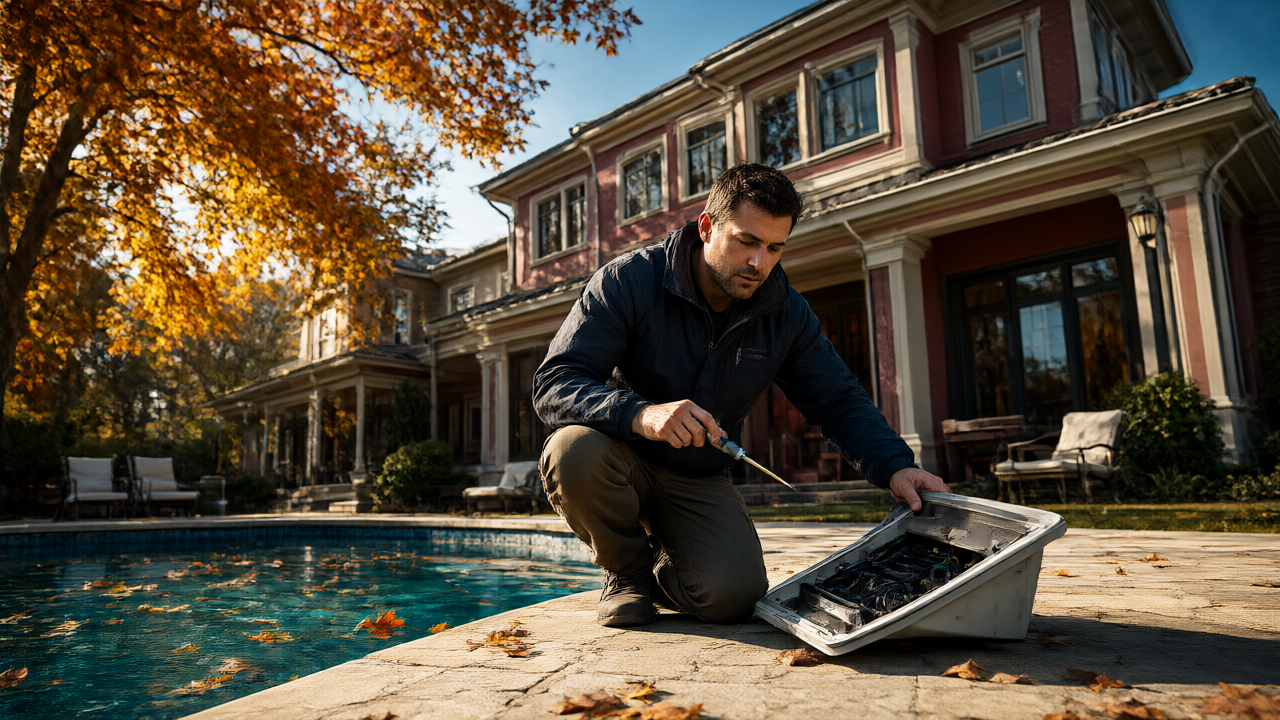
Set aside an hour on a Saturday morning and work through this list. You'll need a garden hose, a soft brush, a flashlight, and a screwdriver. If you're not comfortable opening the cabinet, skip to the professional checks at the end.
- Clear the intake and exhaust vents. Remove leaves, pollen, and insect nests from the heater's air intake and exhaust. A clogged intake can cause the unit to overheat and trip the high limit switch. Use a soft brush and hose to rinse the screens, then let them dry completely before reinstalling.
- Inspect the water connections for leaks. Look at the inlet and outlet unions (where the plumbing meets the heater). Even a slow drip can corrode the manifold. Tighten any loose fittings by hand, but don't overtighten PVC unions. If you see mineral crust, that's a sign of a persistent leak that needs a new O ring or union.
- Test the pressure switch and flow. With the pump running, check that water flows freely through the heater. A dirty filter or clogged pump basket reduces flow, which triggers the pressure switch to shut off the heater. Clean the filter, empty the pump basket, and make sure the heater fires and stays lit for at least 10 minutes.
- Check the flame color. A healthy flame is blue with a slight orange tip. A yellow or sooty flame means incomplete combustion, often caused by dirty burners or a misadjusted gas valve. Don't ignore this; it's a safety issue. Call a technician if the flame looks off.
- Inspect the electrical connections and thermostat. Turn off the breaker first. Open the access panel and look for corrosion, loose wires, or insect nests. Use a flashlight to check the thermostat sensor and wiring. If you see green corrosion on terminals, clean with contact cleaner or call a pro. Set the thermostat to your desired temperature and verify it holds.
These five checks take an hour but can catch the 80% of heater failures that start as small, ignored issues. If you find anything beyond your comfort level, stop and call a professional.
When to Call a Pro for Heater Repair in Houston, Baytown, and Bellaire
Some problems are DIY friendly; others require a licensed technician. Call a pro immediately if you smell gas, see a yellow flame, hear loud banging or rumbling, or notice water leaking from the heater cabinet. These indicate gas leaks, burner problems, or a cracked heat exchanger, all of which are safety hazards. Also call if the heater repeatedly trips the breaker, fails to ignite after three attempts, or shows an error code on the display.
For routine repairs like a faulty pressure switch, a bad thermostat, or a clogged burner, a professional can diagnose and fix the issue in one visit. Pool Bros offers Pool Heater Repair with a diagnostic call intake, on site safety check, full system diagnosis, repair options review, and precision repair execution. Their technicians service all major brands, including Hayward and Pentair, and carry common parts on their trucks. If you're in Houston, Baytown, or Bellaire, they can typically schedule same day service for urgent issues.
What should you expect to pay? A typical diagnostic fee runs $75 to $150, which is often waived if you proceed with the repair. Common repairs like a pressure switch or igniter cost $200 to $400 installed, while a blower motor or control board can run $500 to $900. If the heat exchanger is cracked, replacement is usually more economical than repair, with new heater installations ranging from $2,500 to $4,500 depending on BTU size and efficiency. Always ask for a written estimate and a warranty on parts and labor.
Cost-Saving Tips for Running Your Heater Efficiently All Winter
Heating a pool in Houston isn't cheap. A 400,000 BTU gas heater running four hours a day can add $100 to $200 per month to your gas bill, depending on your rate. But you can cut that significantly with a few smart habits.
First, use a solar cover. A $100 to $200 solar blanket reduces heat loss by up to 70%, allowing you to run the heater less. Second, lower your thermostat. Every degree you lower the water temperature saves about 3% to 5% on heating costs. Most people are comfortable at 78°F to 80°F; setting it to 82°F can add 10% to 15% to your bill. Third, run the heater during off peak hours if your utility offers time of use rates. Fourth, keep the filter clean and the water balanced; a dirty filter restricts flow and makes the heater work harder. Finally, consider a heat pump if you heat the pool regularly. Heat pumps are 2 to 3 times more efficient than gas heaters, though they cost more upfront ($3,000 to $5,000) and work best when temperatures stay above 45°F.
If you're not sure your heater is running efficiently, ask for a Pool Inspection from Pool Bros. They'll check the heater, pump, filter, and controls, and give you a report on any issues.
Emergency Heater Repair: What to Do Before the Holidays
The week before Thanksgiving or Christmas is the worst time for your heater to die. Guests are coming, and you want the pool ready. If your heater fails, don't panic. First, check the obvious: is the breaker tripped? Is the gas valve open? Is the filter clean? Sometimes it's a simple fix. If not, call a repair service immediately. Pool Bros prioritizes emergency calls and offers same day service for urgent heater repairs in Houston and surrounding areas.
While you wait, turn off the heater at the breaker to prevent further damage. Don't keep resetting the breaker if it trips; that indicates a short or ground fault. If you smell gas, evacuate the area and call your gas provider. For less urgent issues, schedule a repair before the holiday rush; the first two weeks of December book up fast. And if your heater is 10 to 15 years old and needs a major repair, consider replacing it now rather than risking a failure during a party.
One more tip: if you're hosting for the holidays, consider heating the pool a day early to ensure it reaches temperature. A 400,000 BTU heater takes 12 to 24 hours to raise the water temperature 10°F, depending on ambient conditions.
Frequently Asked Questions
How do I know if my pool heater needs repair or full replacement?
If your heater is less than 10 years old and the repair costs less than half the price of a new unit, repair is usually the better call. But if the heat exchanger is cracked, the repair bill exceeds $1,000, or the unit is 12 to 15 years old, replacement is more economical. A diagnostic inspection will give you the numbers to decide.
Why is my pool heater short cycling or failing to reach the set temperature?
Short cycling almost always points to a flow issue, a faulty pressure switch, or a clogged burner. Check the filter and pump basket first. If that doesn't solve it, call a technician to test the pressure switch and gas pressure.
How quickly can you get to my property for a heater repair in Houston?
Pool Bros offers same day service for urgent heater repairs in Houston and the surrounding areas, including Baytown and Bellaire. Call in the morning for the best chance of a same day visit.
What does a typical pool heater repair involve and what should I expect during the visit?
The technician will perform a full system diagnosis, including gas pressure, water flow, electrical components, and flame quality. They'll explain the problem, provide a written estimate, and complete the repair on the spot if parts are on hand. Most repairs take one to two hours.
If your heater is acting up or you just want to avoid a holiday surprise, Pool Bros is the local team to call. They've been keeping Houston pools warm for years, and they'll tell you straight up whether you need a repair or just a tune up. Give them a call at (713) 555-0123 or book online.