
Houston pool owners spend a fortune on chemicals trying to fix water that looks fine while the surface underneath is quietly turning to chalk. Here is the number that matters: a full Pool Resurfacing in the Houston area typically runs $4,500 to $12,000 depending on finish and size, while patching a single failing section of plaster runs a few hundred dollars. The difference between those two numbers is almost never the pool. It is how early the homeowner noticed. Pool resurfacing in Houston starts with recognizing six specific warning signs, and most of them show up a full season before the pool actually looks bad.
Chalky White Patches and Rough Texture: What They Mean for Your Pool Surface
Run your hand along the wall near the waterline. If it comes back dusted with white powder, that is plaster breaking down. The calcium in the finish is leaching into the water, which is why your calcium hardness readings keep climbing no matter how many chemicals you add. A brand new plaster surface should feel like polished stone. Once it feels like an old chalkboard, the finish has reached the end of its useful life.
The rough texture is more than a comfort issue. Gritty plaster gives algae a place to grab hold, and it shreds pool vacuums, brushes, and swimsuits. Kids' feet and knees take the worst of it. One Houston homeowner described her pool as "swimming in sandpaper" before she finally called us, and she had been fighting black algae spots in the same three corners for two summers running.
Here is the test you can do yourself in about five minutes:
- Wipe test: Rub a white cloth along the wall at mid depth. White residue on the cloth means active plaster breakdown.
- Touch test: Feel three spots on the wall and three on the floor. Consistent roughness across multiple areas points to a finish problem, not a stain.
- Waterline test: Look for a visible chalky band just above the water. That line is where the plaster has dried out and oxidized.
- Drain test (for pros only): A technician can tell within minutes whether the surface is sound or hollow by tapping with a screwdriver handle.
Chalky patches on their own do not always mean you need a full resurface. A pool that has been neglected on chemistry for a season can sometimes be corrected. But if the chalk has spread across more than a third of the surface, patching becomes a losing game. You will be back at it in twelve months.
Cracks, Delamination, and Peeling: When Resurfacing Can't Wait
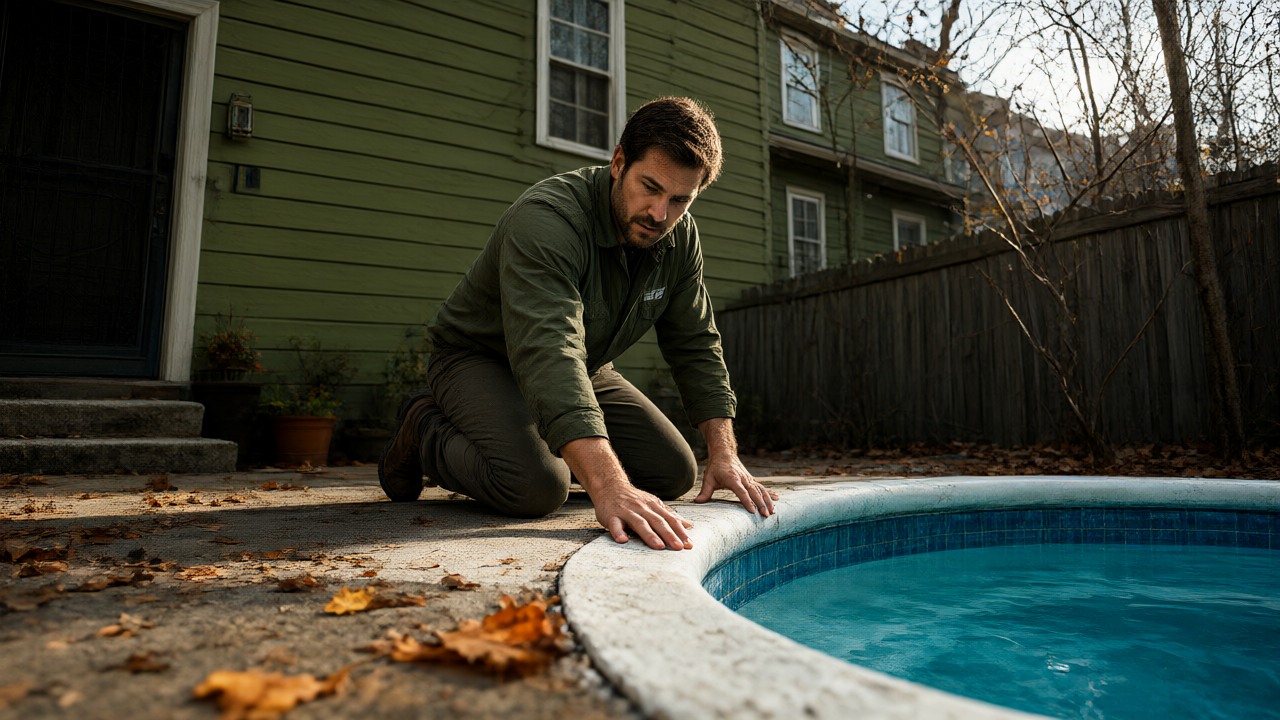
Hairline cracks in plaster are common and usually cosmetic. The cracks that should make you pick up the phone are the ones you can slip a fingernail into, the ones that run in a line across the floor, and the ones where the surface has begun to peel away from the shell underneath. That peeling is called delamination, and it means water is now sitting between the plaster and the gunite.
Delamination is the single most expensive thing to ignore. Once water gets behind the finish, it works on the bond coat and then the shell itself. A $6,000 resurface in 2026 becomes a $15,000 to $25,000 structural repair if the pool shell starts to spall. Houston's expansive clay soil does not help. The ground under most of the city moves with every wet and dry cycle, and that movement transfers stress straight into the pool shell. Cracks that would stay stable in drier climates tend to open and close here.
Peeling plaster usually shows up first on the steps and in the shallow end, where the finish is thinnest. If you can lift an edge of the plaster with your fingernail, that section is gone. Patches over delaminated areas fail within a season because the new material has nothing solid to bond to.
If you can see the gunite shell through the plaster, you are no longer in maintenance territory. You are in repair territory, and the clock is running.
Staining and Discoloration That Won't Brush Away
Not all stains are surface stains. Organic stains from leaves and acorns lift with a little shock and a brush. Copper stains from a corroding heat exchanger leave blue green streaks that respond to acid washing. Iron stains leave rust colored blooms that sometimes come from well water or fertilizer runoff. Those are all fixable without resurfacing.
The stains that signal a failing finish are different. They are mottled, gray, and blotchy, and they sit in the same place no matter how many times you brush. That pattern means the plaster itself has worn thin enough that the color layer is gone and you are looking at the darker cement underneath. Once the finish is translucent in spots, no amount of stain remover will bring back an even color.
Ask yourself one question: does the stain move when I brush it? If yes, it is a stain. If no, it is a wear pattern, and wear patterns mean resurfacing. Pool Bros technicians see this constantly in pools built in the 1990s and early 2000s around Bellaire and West University Place, where the original plaster has simply aged out.
Why Houston's Heat and Humidity Accelerate Surface Breakdown
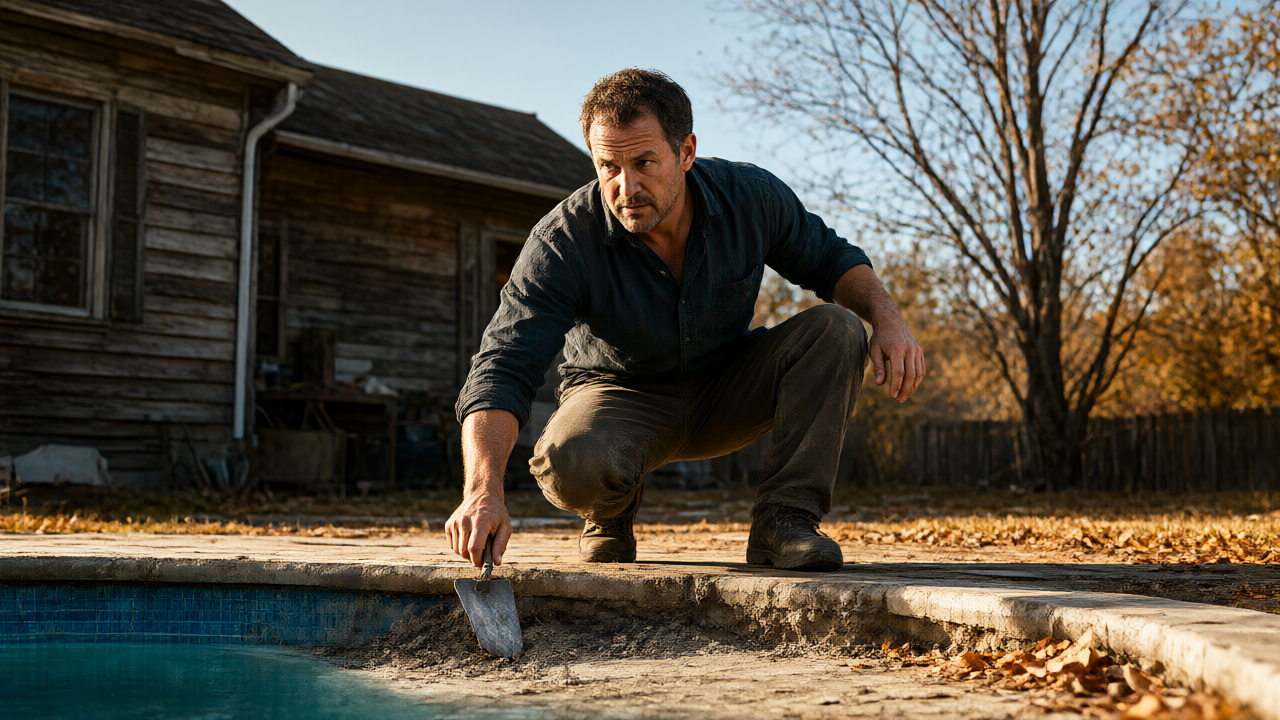
Houston is one of the hardest climates in the country on pool plaster, and it is not just the heat. The combination of 95 to 100 degree summers, high humidity, and year round swimming means the surface never gets a real break. Pools in cooler climates sit idle for months, which lets the plaster dry and stabilize. Here, the pool stays full and chemically active twelve months a year, and that constant exposure wears the finish faster.
Water chemistry is the other half of the equation. Houston tap water runs hard, with calcium hardness often testing above 250 parts per million straight out of the hose. Fill a pool with it and you are starting with water that wants to deposit scale on the finish. Get the balance wrong on the other side, with low pH or low calcium, and the water starts pulling calcium out of the plaster instead. That is the chalky dust you wiped off the wall earlier.
UV exposure does the rest. The Texas sun degrades the top layer of plaster the same way it fades a car's paint. A pool that gets full sun all day will show surface wear two to three years sooner than a shaded pool of the same age. If your pool sits in direct sun from morning to evening, budget for resurfacing on a shorter cycle than the ten to fifteen years often quoted nationally.
The Cost of Waiting: How Small Surface Issues Become Major Repairs
Here is the math that changes minds. A resurface done at the first sign of chalky plaster runs roughly $4,500 to $8,000 for a standard quartz finish on a typical Houston residential pool. Wait two more seasons and delamination sets in, and now you are looking at chip out, structural repair, and a premium finish, which pushes the project to $10,000 to $18,000. Wait long enough for the shell to crack and you are into structural work that can double that again.
The hidden cost is the chemicals. A failing surface drives up chemical consumption because the plaster is constantly interacting with the water. Homeowners fighting a chalky pool often spend $150 to $250 a month on chemicals that a healthy pool would need half of. Over two years that is real money, and it is money spent making a bad situation slightly less bad.
Property value matters too. A resurfaced pool is a selling point in the Houston market. A chalky, cracked pool is a negotiation chip that buyers use to knock five figures off an offer. If you are planning to list in the next two years, resurfacing before the listing almost always pays for itself.
When to Call a Pro: Pool Resurfacing vs. Repair in Houston
You do not always need a full resurface, and any company that tells you otherwise before looking at the pool is telling you something about themselves. A pool with a few hairline cracks, an even color, and a smooth surface usually just needs a deep clean and a chemistry reset. Pool Bros handles that routinely with standard Pool Cleaning and Pool Maintenance visits. A pool with localized damage in one area can sometimes be spot repaired, and that is worth asking about before committing to a full job.
The honest rule of thumb: resurface when the finish is failing across multiple areas, when you can feel roughness over a large portion of the surface, when cracks are structural rather than cosmetic, or when the plaster has worn thin enough to show the shell. If any two of those are true, patching is throwing money at a problem that will come back.
When it is time, ask any contractor three questions before you sign:
- What is the process? A real resurface involves draining, inspecting the shell, chipping out or hydro blasting the old finish, repairing structural flaws, applying a bond coat, troweling the new finish, and then curing and refilling. Anyone skipping the chip out on a delaminated pool is cutting a corner you will pay for.
- What finish are you quoting? Quartz, pebble, and polished plaster all have different lifespans and price points. Get the specific product name, not just "plaster."
- What is the warranty, and what voids it? A finish warranty that requires professional chemical maintenance is normal. One that voids if you miss a single week is a warning sign.
Pool Bros offers free estimates on resurfacing projects, and the crew walks Houston homeowners through the difference between a pool that needs a deep clean and one that has hit the end of its surface life. Most residential resurfacing projects wrap up in one to three weeks depending on scope and weather, and you can usually swim again within a week of the pool being refilled and balanced.
Frequently Asked Questions
How much does pool resurfacing cost in Houston?
Most Houston homeowners pay between $4,500 and $12,000 for a full resurface, with the final number driven by pool size, the finish you choose, and how much structural repair is needed once the old plaster comes off. A standard quartz finish on a typical pool sits at the lower end. Pebble and premium finishes push toward the top.
How do I know if my pool needs resurfacing or just a good cleaning?
If the surface feels rough or chalky underfoot, or if stains stay put no matter how much you brush, resurfacing is likely the right call. If the surface is smooth and the discoloration lifts with brushing, a deep clean and a chemistry reset will usually do the job.
How long does a pool resurfacing project take in Houston?
Most residential projects finish in one to three weeks from drain to refill, depending on the scope of repair and Houston weather. Rain days push the schedule, so plan around a dry stretch if you can.
Will resurfacing my pool increase my property value?
A professionally resurfaced pool improves curb appeal and removes a major negotiation point for buyers. In the Houston market, a fresh finish typically returns most of its cost at resale, and it makes the pool a selling feature rather than a liability.
If you are in Houston, Katy, Sugar Land, Pasadena, or anywhere across the metro and your pool surface is telling you it is tired, Pool Bros will come look at it for free and tell you straight whether you need a resurface or just a good cleaning. Call them, get the honest answer, and skip the guesswork.


