If your Houston pool was resurfaced in 2015, the finish is already on borrowed time. That sounds dramatic until you look at what this city does to pool surfaces. Between 95 to 100 degree summers that bake plaster from May through September, clay soil that swells and shifts every time a front dumps two inches of rain, and water chemistry that drifts the moment a storm rolls through, a pool finish here takes a beating that a Phoenix or Dallas pool never sees. Pool Resurfacing in Houston is not a cosmetic upgrade you get around to eventually. It is maintenance on a clock. The question is whether that clock runs out on plaster, quartz, or pebble, and the answer depends on how you use the pool and what you plan to do with the house.
Why Houston's Heat and Clay Soil Wear Down Pool Surfaces Faster Than You Think
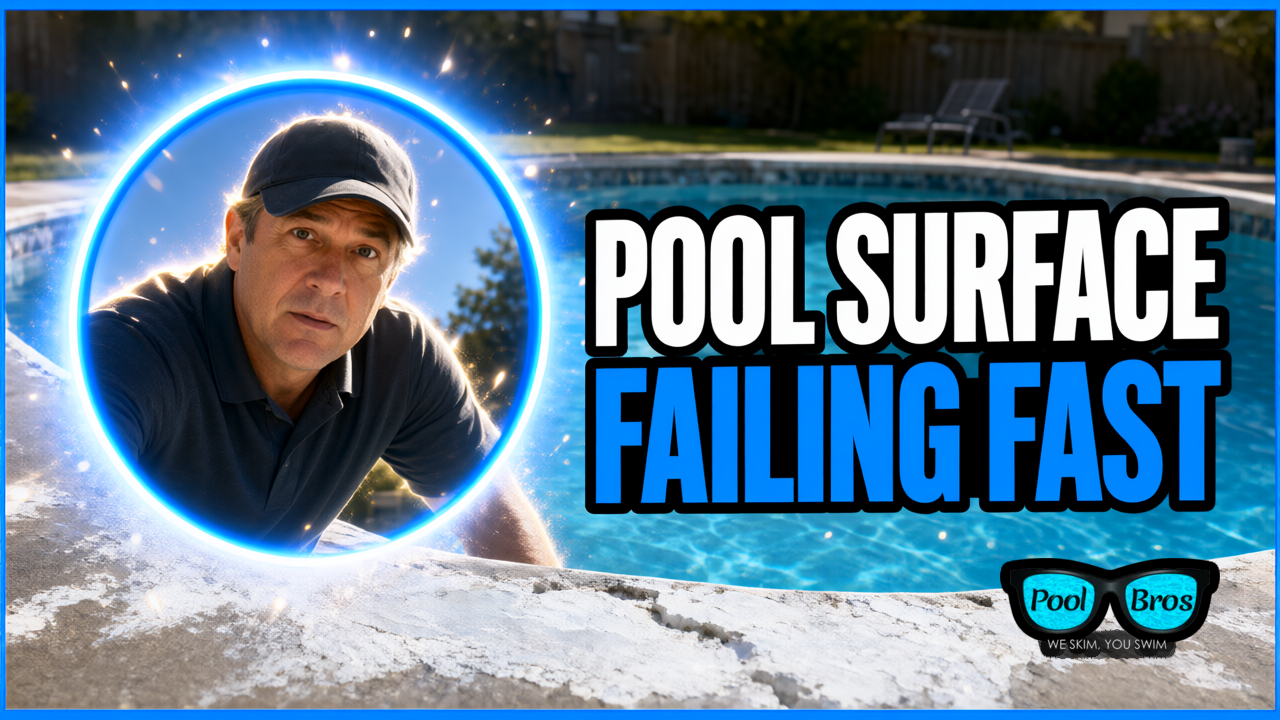
Pool surfaces fail from the inside out, and Houston gives that process two accelerants. The first is thermal. Your pool shell expands in August and contracts in January, and that movement happens across a surface that is only about a quarter inch thick. Plaster does not flex. It cracks, chalks, and eventually delaminates in sheets. When we pull a pool in Katy or Sugar Land that was finished eight years ago, the plaster often comes off in palm sized plates during the chip out, which tells you the bond coat failed long before the homeowner noticed anything wrong.
The second accelerant is the soil. Houston sits on expansive clay that moves with moisture. A dry July followed by a tropical system in August can shift a pool shell enough to open hairline cracks in the finish. Those cracks are not just ugly. They are entry points. Water gets behind the plaster, the shell corrodes or spalls, and a resurfacing job that should have cost a few thousand dollars turns into structural repair.
Water chemistry makes it worse. Houston's municipal water runs alkaline, and after a hard rain, runoff carries debris and diluted chemicals into the pool. If your pH drifts above 7.8 for a few weeks, you are etching the surface. If it drops below 7.2, you are scaling it. Both shorten the life of any finish. Bryan Ezzell, one of our senior technicians with more than 20 years in the field, puts it simply: a pool that gets tested twice a week in summer will outlast an identical pool tested once a week by three to five years.

Plaster, Pebble, and Quartz: How Each Surface Type Performs in Houston Conditions
Three families of finish dominate Houston pools, and they behave very differently under our conditions.
Plaster is the traditional white or colored cement based finish. It is the cheapest to install and the softest underfoot, which matters if you have kids or you spend a lot of time standing in the shallow end. The tradeoff is lifespan. In Houston, a standard plaster finish typically gives you 7 to 10 years before it starts to chalk, stain, or feel rough. Some pools on a strict maintenance routine stretch to 12. Most do not. Plaster also shows every leaf tannin and metal stain, and Houston's live oak and pecan debris will leave its mark if you do not stay on top of it.
Quartz aggregate is plaster with quartz crystals mixed in. The quartz adds hardness and a subtle sparkle, and it resists staining and chemical erosion better than straight plaster. Expect 10 to 14 years in a Houston pool with decent care. Quartz is the middle child, and like most middle children, it is often the smartest buy. It costs roughly 20 to 35 percent more than plaster but lasts 40 percent longer, which usually pencils out over a 20 year ownership window.
Pebble finishes are the premium option. A pebble surface is made of small river rock or glass beads set in a cement matrix, and it is hard. Really hard. In Houston's heat and clay, a properly applied pebble finish can run 15 to 20 years or more. It resists staining, tolerates chemistry swings better than anything else, and holds its color. The catch is texture. Pebble feels rougher on feet, and some homeowners in Bellaire and West University Place tell us their kids complain about it in the shallow end. The other catch is cost, which we will get to.
Head-to-Head Comparison: Upfront Cost, Lifespan, and Maintenance for Each Material
Here is what these numbers actually look like in the Houston market as of 2026. A standard residential pool runs 400 to 600 square feet of surface area, and pricing scales with square footage, prep work, and finish choice.
- Plaster: Typically $4,500 to $8,500 installed. Lifespan 7 to 10 years. Annual maintenance cost is low, but you will pay more in chemistry because plaster is chemically reactive.
- Quartz: Typically $6,500 to $11,000. Lifespan 10 to 14 years. Chemistry demand is moderate, and it resists staining better than plaster.
- Pebble: Typically $9,000 to $16,000 or more depending on the blend and prep. Lifespan 15 to 20 years. Lowest chemistry sensitivity and best stain resistance of the three.
Run the math on cost per year of service life and the ranking flips. Plaster at $7,000 over 8 years works out to about $875 per year. Quartz at $9,000 over 12 years is about $750 per year. Pebble at $13,000 over 18 years is roughly $720 per year. The premium finish is not actually more expensive over the long haul. It is just a bigger check up front.
Maintenance differs too. Plaster wants consistent brushing in the first 30 days after application and gentle chemistry for the first month. Pebble requires an acid wash or a longer startup to expose the aggregate, and it needs a slightly different chemical balance during cure. Every finish needs the same core routine: weekly Pool Cleaning, balanced water, and a twice annual Pool Inspection to catch cracks before they spread. Skip the inspection and you will pay for it at the resurfacing stage.
If your pool surface feels rough, chalky, or sharp underfoot, you are past the point where a deep clean helps. That is a resurfacing call, not a cleaning call.

Which Resurfacing Material Fits Your Houston Pool? A Decision Guide by Pool Type and Budget
There is no universal right answer, but there is a right answer for your pool and your plans. Use this guide.
- You are selling within 3 years. Go quartz. It reads as an upgrade, it holds up for the buyer's inspection, and it does not price you out of the deal the way pebble sometimes does in a competitive Katy or Missouri City listing.
- You plan to stay 10 or more years. Go pebble. The cost per year is lower, and you will not be doing this again in 2035.
- You have young kids or a shallow play area. Plaster or a smooth quartz blend. Pebble is tough but it is not tender on small feet.
- Your pool is heavily shaded by oaks or pecans. Pebble or quartz. Both resist leaf tannin staining far better than plaster.
- Your budget is tight and the finish is not failing yet. Wait. Do not resurface a pool that still has three good years left. Put the money into Pool Maintenance and water chemistry instead. This is the piece most contractors will not tell you.
When resurfacing is the right call, the process matters as much as the material. Pool Bros runs every project through a fixed sequence: drain and inspect the shell, chip out or hydro blast the old finish, repair structural flaws, apply a bond coat, trowel the new finish, then cure, fill, and start up the pool. Skipping the bond coat or rushing the cure is how a $12,000 job fails in four years. Ask any contractor you interview how they handle those two steps, and listen carefully to the answer. If they brush past it, walk away.
Timeline is usually one to three weeks from drain to swim ready, with weather the main variable. Houston's summer thunderstorms can push a project a few days, and the cure period for the finish itself cannot be rushed.
How to Vet a Pool Resurfacing Contractor in Houston, Baytown, and Katy
Resurfacing is one of the easiest trades to get burned in, because the failure shows up years later when the contractor is long gone. Here is how to protect yourself.
- Ask for the license and insurance, then verify them. Every technician who touches your pool should hold a valid license and the company should carry liability coverage. Ask for the certificate, not just a verbal yes.
- Ask what happens if the finish fails in three years. A real warranty is specific about what it covers, for how long, and what voids it. Vague promises are a red flag.
- Ask how they prep the shell. Chip out and hydro blast are the two legitimate methods. A contractor who says they will just rough up the old surface and trowel over it is selling you a shortcut that will fail.
- Ask for local references from the last 24 months. Not photos from a brochure. Actual addresses in Houston, Baytown, or Pasadena you can drive past and see how the finish is holding up.
- Get at least three written estimates. If one is dramatically lower than the others, it is usually because prep or cure steps are being cut.
One more insider note. Pool resurfacing is often bundled with Pool Repair work, and that is usually a good thing. If the shell has cracks, the tile is loose, or the skimmer throat is failing, fix it during the resurfacing rather than after. Doing it in one pass saves you thousands in mobilization costs later. Pool Bros offers a free estimate for resurfacing and installation projects, and the team will tell you honestly whether your pool needs a full resurface, a partial repair, or just a deep clean. That last answer does not make them money, and they give it anyway.
Frequently Asked Questions
How much does pool resurfacing cost in Houston in 2026?
Most Houston homeowners spend between $4,500 and $16,000, depending on the finish and the condition of the shell. Plaster sits at the low end, pebble at the high end, and quartz lands in the middle. Cracks, tile replacement, or plumbing repairs during the project can add to the total.
How do I know if my pool needs resurfacing or just a deep cleaning?
Run your hand along the wall. If it feels rough, chalky, or sharp, or if you are seeing stains that do not lift after a proper cleaning, the finish is failing and resurfacing is the right call. Cloudy water and debris are cleaning issues. Surface texture is a resurfacing issue.
How long does pool resurfacing take from start to finish?
Most residential projects wrap up in one to three weeks, weather permitting. The finish itself cures for several days before you can swim, so plan on a short window where the pool is off limits. Houston's summer storms can add a few days.
Will resurfacing my pool increase my property value?
Yes, and often by more than the project costs. A fresh finish is one of the first things a buyer's inspector flags, and a pool that looks new reads as a maintained home. In competitive markets like Katy, Sugar Land, and Bellaire, a resurfaced pool can meaningfully move the sale.
If your pool is in the Houston, Baytown, or Katy area and the finish is starting to feel rough or look stained, Pool Bros handles Pool Resurfacing from drain to swim ready, with a free estimate and a straight answer about whether you actually need it. Call them before you sign anything with anyone else. They will tell you if a deep clean and a maintenance plan will buy you another three years, and if it will not, they will walk you through plaster, quartz, and pebble pricing without the sales pressure.