
Every summer, Houston pool owners face the same unsettling morning ritual: the water level has dropped again. Before you assume the worst, know this: a pool in Harris County can lose a quarter inch to a half inch of water per day to evaporation during July and August, which adds up to 3 to 4 inches a week. That's not a leak. That's physics. But when the loss is faster, or the pattern is wrong, you're dealing with something that won't fix itself. Telling the difference between pool leak vs evaporation is the first step toward avoiding a $600 water bill and a $3,000 structural repair.
Houston's Heat and Humidity: Why Evaporation Can Mimic a Leak
Houston's climate is a perfect storm for water loss confusion. Average summer highs hover around 95°F, humidity often exceeds 70%, and the sun beats down on exposed pool surfaces for 10 to 12 hours a day. That combination drives evaporation rates that can reach 0.3 inches per day in an uncovered pool, according to industry estimates. A pool with a surface area of 400 square feet can lose roughly 75 gallons a day to evaporation alone. Multiply that by a week and you're looking at more than 500 gallons, which translates to a noticeable drop in the waterline.
Wind makes it worse. A steady 10 mph breeze across a Houston backyard can double the evaporation rate. Add in the splash-out from kids and dogs, and you have a recipe for daily water loss that looks alarming but is completely normal. The confusion deepens because Houston's soil is notoriously expansive. Clay-rich ground shifts with moisture changes, and that movement can crack pool shells or plumbing lines, creating real leaks that start small and grow. So the question isn't whether water loss is happening. It's whether the cause is evaporation or a leak. The answer usually comes down to measurement.

The Bucket Test: A Step-by-Step DIY Method to Confirm a Leak
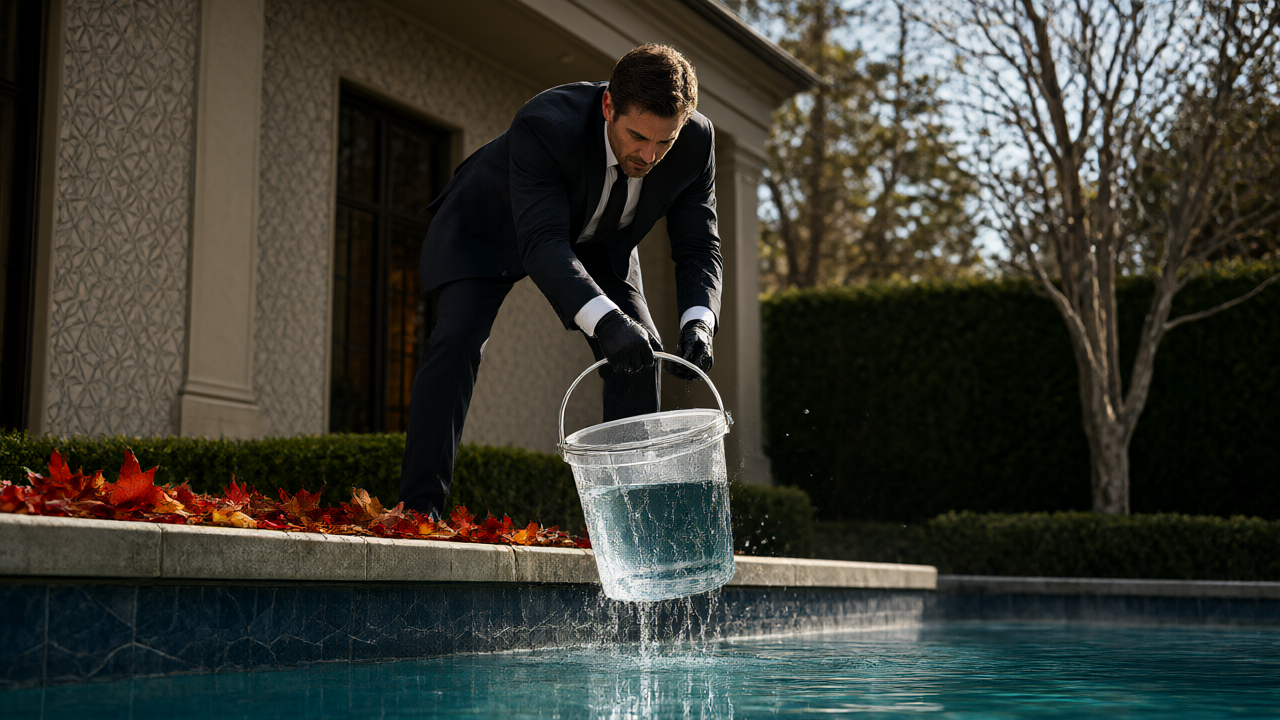
The bucket test is the oldest trick in the pool business, and it still works. It costs nothing, takes 24 hours, and gives you a clear answer. Here's how to run it correctly so you don't get a false result.
- Fill a plastic bucket (a 5-gallon bucket works well) with pool water until the level is about an inch from the top.
- Set the bucket on the first step of your pool, or on a submerged ledge, so the water inside the bucket is at the same level as the pool water outside.
- Mark both water levels with a piece of tape or a grease pencil on the inside of the bucket and on the pool wall or tile.
- Turn off the pool pump and any auto-fill system. Leave the pool undisturbed for 24 hours. No swimming, no topping off.
- Compare the levels the next day. If the pool water dropped more than the bucket water, you have a leak. If both dropped by the same amount, it's evaporation.
One important caveat: Houston's heat can evaporate water in the bucket too, so the comparison is relative, not absolute. A difference of 1/4 inch or more between the bucket and the pool is a strong signal that something is leaking. If the difference is smaller, run the test again on a cooler day or with the pool shaded. And if you have an auto-fill, turn it off for the test. Otherwise you're measuring nothing.
5 Signs It's a Leak, Not Evaporation (Cracks, Wet Spots, Pump Cycles)
Water loss is the headline, but leaks leave a trail of evidence. Here are five signs that you're dealing with a leak, not just Houston's summer sun.
- Cracks in the pool shell or deck. Hairline cracks in plaster are common and often harmless. But cracks wider than a credit card, or any crack that runs across the decking toward the pool, can let water escape. Check the skimmer throat and the area around light niches too.
- Wet spots or sinkholes in the yard. A saturated patch of grass that never dries, or a depression forming near the pool equipment pad, suggests water is escaping underground. This is especially common in Houston's clay soil, where a plumbing leak can create a small sinkhole within weeks.
- The pump loses prime or runs constantly. If your pump is sucking air or cycling on and off more than usual, a leak on the suction side is pulling air into the system. You might see bubbles in the pump basket or coming out of the return jets.
- Higher than normal water bills. A pool leak of just 1 inch per day on a 500 square foot pool wastes about 300 gallons daily. That's roughly 9,000 gallons a month, which can add $50 to $100 to your Houston water bill depending on your rate tier.
- Algae growth or cloudy water despite proper chemicals. A leak can dilute your chlorine and stabilizer levels, making it harder to keep water clear. If you're adding chemicals more often and still fighting algae, water loss might be the culprit.
One more insider tip: check the skimmer. If the water level drops below the skimmer mouth, the pump runs dry and can burn out in minutes. That's a $300 to $600 repair you don't want. Keep the water at the middle of the skimmer opening.
When to Call a Pro: Pool Leak Detection in Houston and What to Expect
If the bucket test points to a leak, or you've spotted two or more of the signs above, it's time for professional pool leak detection in Houston. DIY dye tests and visual inspections can only take you so far. A pro uses pressure testing, electronic listening equipment, and sometimes smoke or dye injection to pinpoint the leak without tearing up your yard. At Pool Bros, technicians like Joshua Naujokas and David Rivas, both with 12+ years of experience and CPO certifications, use a combination of these methods to find leaks in the shell, plumbing, skimmers, and equipment pad.
What should you expect? A typical leak detection service in Houston runs $250 to $450 for a standard residential pool, and most companies apply that fee toward the repair if you hire them for the fix. The detection itself takes 1 to 2 hours. The technician will ask you about water loss history, inspect the pool and equipment, and often isolate sections of plumbing with pressure tests. If the leak is underground, they might use a listening device that amplifies the sound of water escaping. You should get a written report with the location and recommended repair, plus a clear estimate before any work begins.
Red flags to watch for: a company that wants to start digging without a detection report, or one that quotes a repair before finding the leak. Also ask whether they carry liability insurance and whether the detection fee is credited toward the repair. Pool Bros offers free estimates for many services, and for leak detection, the team will walk you through the findings and options. If the leak is simple, like a bad O-ring on the pump or a loose fitting, they'll tell you. You might not need a major repair at all.
Preventing Future Leaks: Maintenance Tips for Houston Pool Owners
Once you've fixed a leak, the goal is to keep it from happening again. Houston's soil movement and heat make prevention a year round job, but a few habits go a long way. First, keep your water chemistry balanced. Low pH or alkalinity can corrode plaster and metal fittings, leading to cracks and leaks. Test twice a week during swim season and adjust as needed. Second, inspect the pool shell and deck monthly. Look for new cracks, gaps around the skimmer, and loose tiles. Seal any cracks wider than a hairline with a pool grade sealant before they grow.
Third, watch your water level. If you have an auto-fill, check it monthly for leaks or malfunctions. A stuck auto-fill can mask a leak by constantly adding water, which dilutes chemicals and wastes water. Fourth, winterize properly. Even though Houston winters are mild, a hard freeze can crack pipes and equipment. Drain above ground lines and protect the pump if a freeze is forecast. Finally, schedule an annual Pool Inspection. A professional can catch small issues, like a failing pump seal or a worn skimmer gasket, before they turn into expensive repairs. Pool Bros offers pool inspections that cover the shell, plumbing, equipment, and safety features.
Remember: you don't need a pro for every water level drop. If the bucket test says evaporation, just top off and move on. But if the signs point to a leak, don't wait. A small leak can become a big problem fast in Houston's soil. For pool leak detection in Houston, Pool Bros serves homeowners in Bellaire, Katy, Sugar Land, Pasadena, and across the metro area. Give them a call and they'll tell you straight up whether it's a leak or just the sun.
Frequently Asked Questions
How much water should my pool lose per day in Houston?
Most Houston pools lose about 1/4 to 1/2 inch per day to evaporation during summer. That's normal. If you're losing more than an inch a day, or the loss continues in cooler weather, it's worth doing a bucket test to check for a leak.
Can I find a pool leak myself?
You can confirm whether you have a leak with the bucket test, and you can sometimes spot visible cracks or wet spots. But finding the exact source, especially underground plumbing, requires professional equipment. A pro can pinpoint the leak without guesswork.
How much does pool leak detection cost in Houston?
Expect to pay $250 to $450 for a standard residential leak detection in the Houston area. Many companies, including Pool Bros, credit the detection fee toward the repair if you hire them for the fix. Always ask for a written estimate first.
What should I do if I suspect a leak but the bucket test is inconclusive?
Run the test again over 48 hours, and make sure the pool pump is off and no one uses the pool. If the difference between the bucket and pool levels is still less than 1/4 inch, it's probably evaporation. But if you're losing water consistently and can't explain it, call a professional for a proper assessment.
If you're in the Houston area and your pool is losing water faster than the bucket test can explain, Pool Bros handles exactly this kind of thing. Their certified technicians use pressure testing and electronic leak detection to find the source without tearing up your yard. Give them a call. They'll tell you straight up whether it's a leak or just the sun, and what it'll take to fix it.