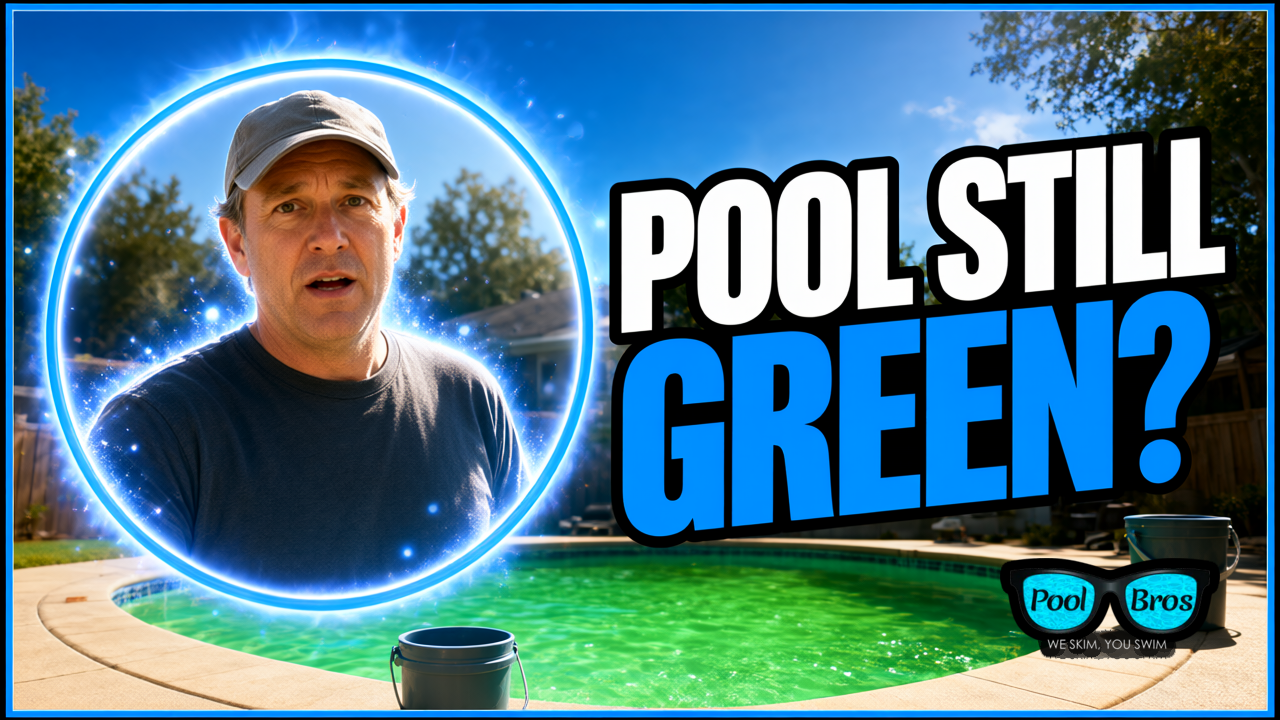
You dumped in two pounds of shock, waited twelve hours, and your Houston pool is still green. It happens to almost every pool owner at least once, and it's rarely because you did something wrong. The problem is that chlorine doesn't work in a vacuum. In Houston's heat, rain, and humidity, a long list of factors can burn through your shock dose before it ever touches the algae. Here are the five reasons pool shock fails, how to diagnose the real culprit, and when it's time to call in a pro for pool cleaning in Houston.
Why Houston's Heat and Rain Make Chlorine Burn Off Before It Works
Chlorine is a consumable. Sunlight and heat destroy it, and Houston has plenty of both. On a typical August day, an unprotected outdoor pool can lose 50 to 90 percent of its free chlorine within two to three hours of direct sun exposure. If your stabilizer level is low, that shock you added at 9 a.m. may be mostly gone by lunch. Heavy rain makes it worse. A single inch of rain can dilute your chemistry and wash away chlorine, and Houston averages roughly 50 inches of rain per year, often in violent bursts.
The result is a pool that looks shocked on paper but has almost no active sanitizer when the algae starts reproducing. Algae can double in population every six to twelve hours in warm water. So even if your shock killed 90 percent of the bloom, the survivors repopulate before the next dose. That's why a green pool can stay green after chlorine: you're not killing the algae faster than it grows back.
Here's the practical fix. Test your free chlorine at dusk, after the sun is off the pool, and again at dawn. If the overnight loss is more than 1.0 ppm, you have demand eating your chlorine. If the daytime loss is huge but the overnight loss is small, the sun is the problem, and you need stabilizer. That one test tells you which direction to go before you waste another $40 on shock.
Check Your Cyanuric Acid (Stabilizer) Level: The Hidden Reason Shock Fails
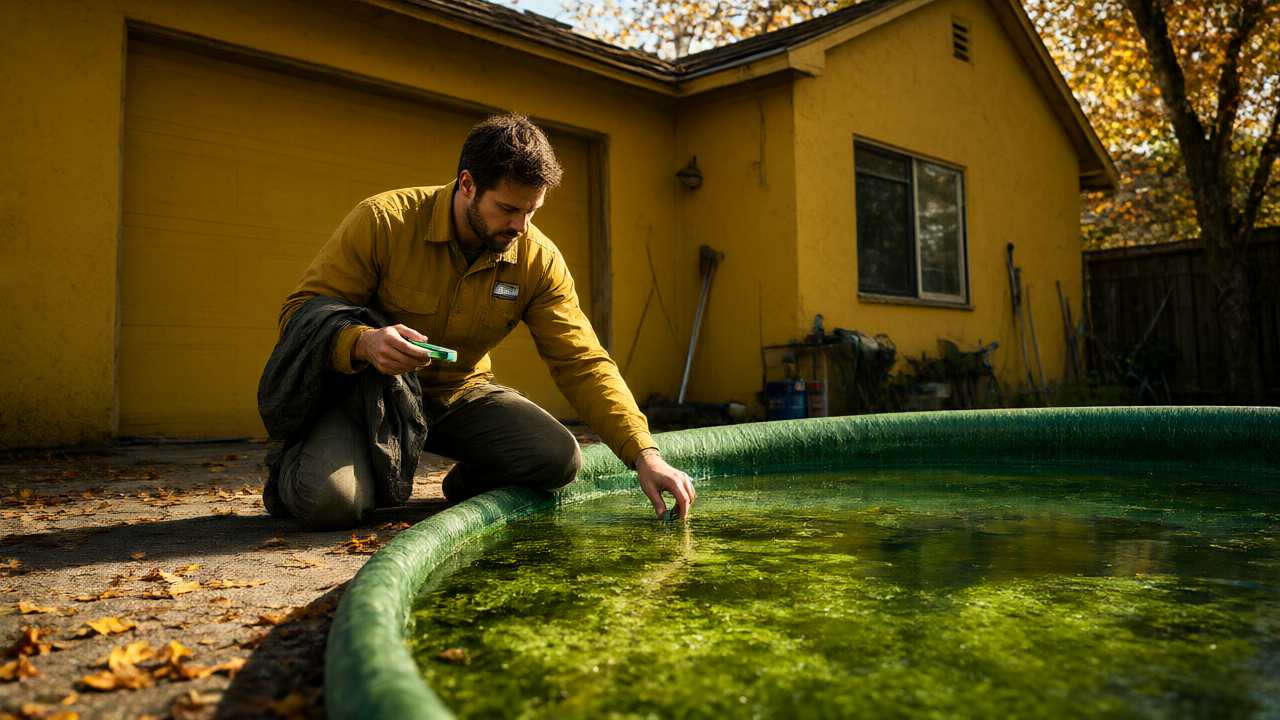
Cyanuric acid, often called stabilizer or conditioner, acts like sunscreen for your chlorine. Too little, and the sun destroys your shock before it works. Too much, and your chlorine becomes chemically locked and stops killing algae. Most green pool mysteries trace back to this single number. The target range for a Houston pool is 30 to 50 ppm for a manually dosed pool, and up to 70 to 80 ppm for a saltwater pool using a generator.
Here's what most pool owners never hear: if your cyanuric acid is above 80 to 100 ppm, adding more shock is like putting more water in a cup that's already full. The chlorine is there, but it's bound to the stabilizer and can't sanitize. The only real fix is partial drainage and refill, usually 25 to 50 percent of the pool volume, which in Houston can cost $150 to $400 depending on water rates and pool size. Pool stores often sell you shock and algaecide for weeks before anyone tests the stabilizer. Ask for that number first.
If you don't own a test kit with a cyanuric acid test, get one. A decent kit runs $60 to $90 and will save you hundreds in wasted chemicals. Test once a month during swim season and after any major rain event. If the level is low, add stabilizer according to the label, usually 1 pound per 10,000 gallons to raise it about 10 ppm. If it's high, stop adding stabilized chlorine tabs and switch to liquid chlorine or cal hypo until you can dilute the water.
High Chlorine Demand: How Algae and Debris Eat Your Shock Dose
Chlorine demand is the amount of chlorine your pool consumes just to neutralize contaminants before any is left over to sanitize. A clean pool might have a demand of 1 to 2 ppm per day. A green pool with visible algae, leaves, pollen, and organic debris can have a demand of 10 to 30 ppm or more. That means your standard 1-pound bag of shock, which raises a 15,000-gallon pool by roughly 6 to 7 ppm, is gone before it makes a dent.
This is where the shock math matters. To actually kill an algae bloom, you need to reach and hold a free chlorine level of 10 to 20 ppm, sometimes higher, until the water clears and the overnight chlorine loss drops below 1 ppm. That's called the SLAM process: shock level and maintain. One dose won't do it. You may need to add chlorine every few hours for the first day or two, brushing the walls and floor to break up the algae's protective layer. If your pool is full of leaves and sludge, remove the solids first. Chlorine spent oxidizing a pile of leaves is chlorine not spent killing algae.
Here's a checklist for a stubborn green pool:
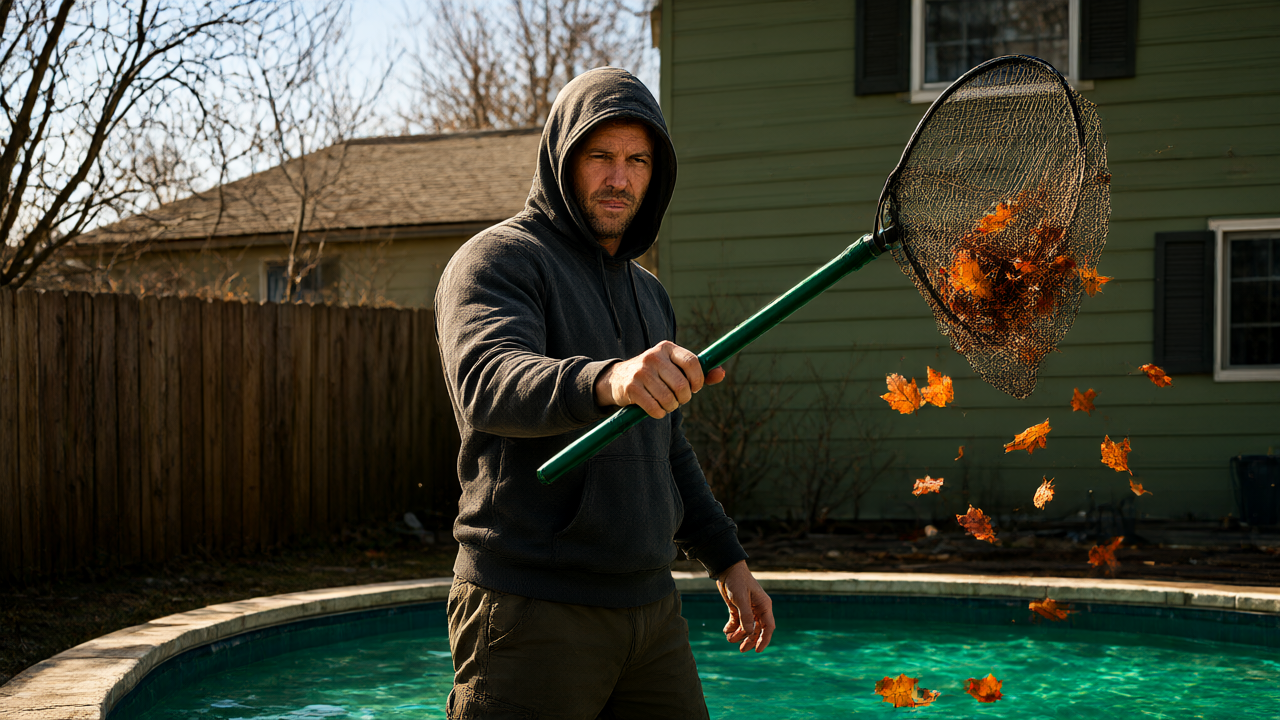
- Remove debris first. Net out leaves, skim the surface, and vacuum what you can. Solid organics create huge chlorine demand.
- Brush every surface. Algae clings to walls, steps, and corners. Brushing exposes it to chlorine.
- Test and adjust stabilizer before you shock. If it's over 80 ppm, dilute first.
- Lower pH to 7.2 to 7.4 before shocking. Chlorine is far more effective at lower pH.
- Shock at dusk so the sun doesn't eat your dose, and run the pump 24 hours a day until the water clears.
- Test free chlorine twice daily and re-dose to maintain shock level until the overnight loss is under 1 ppm.
If you follow that sequence and the pool is still green after five to seven days, something else is wrong, and that's usually a filtration or circulation problem.
pH and Alkalinity Out of Range? Chlorine Can't Do Its Job
Chlorine's killing power depends on pH. At a pH of 7.2, roughly 60 percent of your free chlorine is in the active hypochlorous acid form that actually sanitizes. At a pH of 8.0, that number drops to about 20 percent. So a pool at high pH can have plenty of chlorine on the test and still grow algae. Houston's water and heavy rainfall push pH around constantly, and many pools drift upward naturally.
Total alkalinity is the buffer that keeps pH stable. If alkalinity is low, pH swings wildly, and your chlorine effectiveness follows. If alkalinity is high, pH locks high and you fight it all summer. Target 80 to 120 ppm for total alkalinity and 7.4 to 7.6 for pH. Test both before you shock. If pH is above 7.8, add muriatic acid according to the label to bring it down, then shock. This one step is often the difference between shock working and shock failing.
Also check your filter and circulation. Chlorine needs to reach the algae, and algae hides in dead spots. If your pump is undersized, your filter is clogged, or your return jets aren't moving water, you'll get green patches even with perfect chemistry. Backwash or clean the filter, make sure the pump runs at least 8 to 10 hours a day in summer, and check that the skimmer and main drain are pulling properly. A $20 pressure gauge reading on the filter tells you when it's time to clean.
When to Stop DIY: 3 Signs You Need a Pro Pool Cleaning in Houston
Most green pools can be fixed with the steps above. But some problems are beyond what a homeowner can reasonably handle, and continuing to dump shock into a pool with an underlying issue just burns money. Here are three signs it's time to call a professional.
- You've spent more than $150 on chemicals and the pool is still green after a week. At that point, the cost of more shock and algaecide exceeds a professional pool cleaning visit, and you still don't know the root cause.
- Your stabilizer is above 100 ppm or your filter and pump aren't working right. Diluting the pool, diagnosing equipment, and handling large water exchanges are jobs for someone with the right tools and test equipment.
- The water is cloudy or green and you can't see the bottom. That's a safety issue. A pool service technician can safely vacuum, treat, and inspect the pool without risking a fall or electrical hazard.
For Houston homeowners, a one-time green pool recovery typically runs $250 to $500 depending on pool size and severity, and weekly pool cleaning service runs about $100 to $180 per month for a standard residential pool. Pool Bros serves Houston, Bellaire, Katy, Sugar Land, Pasadena, Baytown, and the surrounding areas, and the team includes Certified Pool Operators who can test stabilizer, diagnose equipment, and get the water balanced instead of just selling you another bucket of shock. If you're in Baytown or Deer Park and your pool has been green for more than a week, a professional pool cleaning in Houston is the cheaper path forward.
Frequently Asked Questions
How long does it take for shock to clear a green pool?
With proper shock level and maintenance, most green pools start to clear within 24 to 48 hours, and fully clear in three to five days. If the pool is still green after a week of correct dosing, you likely have high stabilizer, a filtration problem, or high chlorine demand from debris.
Can I swim in a pool that's still green after shocking?
No. Wait until the water is clear, the free chlorine level is back below 5 ppm, and the pH is in range. Green water can harbor bacteria, and high chlorine levels irritate skin and eyes.
Why does my pool turn green right after I shock it?
That's often dead algae turning the water cloudy or gray green, not new growth. It means the shock is working. Keep the filter running and brush the pool, and the dead algae will filter out. If the water turns bright green within hours, you didn't reach shock level or your stabilizer is too high.
How much does professional pool cleaning cost in Houston?
Weekly pool cleaning in Houston typically runs $100 to $180 per month for a standard residential pool. A one-time green pool recovery costs $250 to $500 depending on pool size and how far gone the water is.
If you've shocked the pool twice and it's still green, stop buying chemicals and get a real diagnosis. Pool Bros handles exactly this kind of thing across Houston, Bellaire, Katy, Sugar Land, and the surrounding areas. Call them, and they'll tell you straight up whether it's a chemistry fix, an equipment problem, or something a weekly Pool Maintenance plan would prevent altogether.