Your pool pump is running, the water is moving, but the pressure gauge reads zero and the return jets are blowing nothing but air. You've got a pool pump not priming, and in Houston's heat, every hour without circulation is an hour closer to algae, cloudy water, and a repair bill that could have been avoided.
Here's the good news: lost prime is one of the most common pool problems, and most of the time you can fix it yourself in under an hour. This guide walks you through exactly how to prime a pool pump, the five usual suspects behind pool pump lost prime Houston homeowners call about, and when it's time to stop wrestling with it and call in a pro.
What 'Priming' Means and Why Houston Pumps Lose It
Priming is simply getting all the air out of the pump and suction line so the pump can pull water instead of air. A pump is not self priming in the way a well pump is. It needs a solid column of water to create the vacuum that draws water from the pool. When that column breaks, the pump spins dry, the motor gets hot, and the seal and impeller take a beating.
Houston is especially hard on pump prime for three reasons. First, our water tables are high and our soil shifts, which puts stress on underground plumbing and can open small cracks that let air in. Second, summer temperatures regularly push past 95°F, and that heat expands and contracts fittings, loosening unions just enough to break the seal. Third, we get torrential rain events that raise the pool level above the skimmer mouth, causing the skimmer to gulp air instead of water.
You'll know you've lost prime when the pump basket is full of air, the pressure gauge sits at zero, the return jets sputter, and the pump sounds like it's gargling. Catch it early and it's a 10 minute fix. Let it run dry for a day and you're looking at a $250 to $450 seal and impeller replacement, or worse, a burned out motor.
How to Prime a Pool Pump: Step-by-Step for Homeowners
Before you touch anything, turn the pump off at the breaker. Never open the pump basket lid while the pump is running. Once it's off, follow these steps:
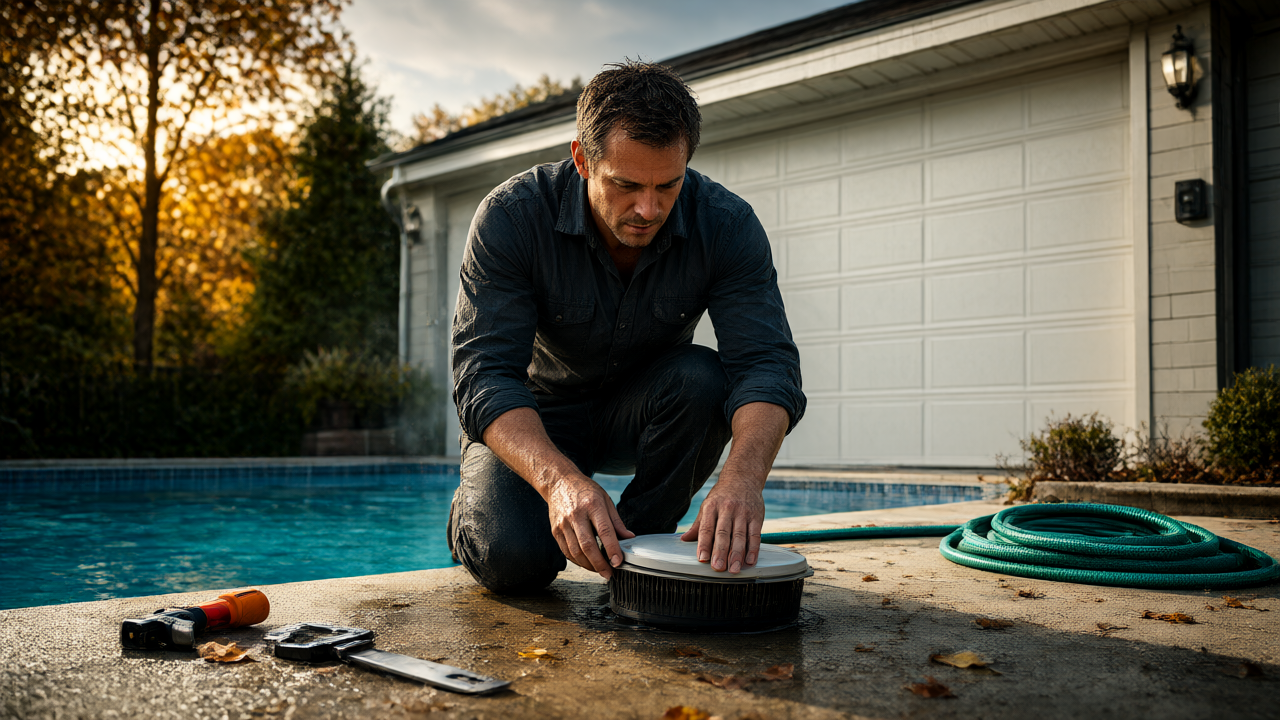
- Fill the pump basket with water. Use a garden hose and fill the basket all the way to the top. This gives the pump the water it needs to create suction.
- Check the lid O ring. Remove the lid, inspect the rubber O ring for cracks or debris, lubricate it with silicone based pool lube, and reseat it. A dry or dirty O ring is the number one cause of lost prime.
- Open all suction and return valves. Make sure the skimmer valve and main drain valve are fully open. A partially closed valve starves the pump.
- Turn the pump on and watch the basket. You should see water swirling and the basket filling within 30 to 60 seconds. If it doesn't, shut it off immediately and move to the troubleshooting section below.
- Bleed the filter. Open the air relief valve on top of your filter until a steady stream of water comes out, then close it. This purges trapped air from the system.
If the pump primes and holds, you're done. Note the pressure gauge reading on your filter. That's your baseline. A jump of 8 to 10 PSI above baseline later on usually means it's time to clean the filter, not that you've lost prime again.
Pool Pump Not Priming? 5 Common Causes and Fixes
If you've followed the steps above and the pump still won't hold prime, one of these five issues is almost certainly the culprit. Work through them in order, cheapest and easiest first.
1. Air Leaks on the Suction Side
This is the most common cause, and it's often invisible. Air gets pulled into the system through a loose union, a cracked valve, a bad O ring, or a hairline crack in the pump housing. The telltale sign is air bubbles in the pump basket even when the pool water level is correct. Check every fitting between the skimmer and the pump. A smear of shaving cream or soapy water on suspect joints will bubble if air is being drawn in.
2. Clogged Skimmer or Pump Basket
Houston's live oaks and crepe myrtles drop leaves, seeds, and pollen that pack into skimmer baskets fast. A clogged basket restricts flow and the pump starves. Empty the skimmer basket every day during heavy leaf drop and the pump basket at least once a week. If you've got a lot of trees, consider a skimmer guard or a robot cleaner to cut down on debris load.
3. Low Water Level
If the water level drops below the skimmer mouth, the skimmer sucks air. In Houston's summer heat, evaporation can pull the level down 1 to 2 inches per week. Keep the water at the midpoint of the skimmer opening. If you're topping off more than twice a week, you may have a leak. Pool Bros offers Pool Leak Detection using pressure testing and electronic listening equipment to find hidden water loss before it wrecks your pump.
4. Bad Pump Lid O Ring or Cracked Lid
The lid O ring is a $5 to $15 part that causes more lost prime calls than any other single component. If it's flattened, cracked, or missing, replace it. Also inspect the lid itself for hairline cracks. A cracked lid lets air in no matter how tight you screw it down.
5. Worn Impeller or Diffuser
If the pump runs but won't pull water and you've ruled out air leaks, the impeller may be clogged with debris or worn down. This requires disassembling the pump. If you're not comfortable with that, this is the point to call a technician. Pool Bros Pool Pump Repair handles impeller, seal, and motor issues for homeowners across Houston, Bellaire, and Katy.

When to Call a Pro: Repair vs. Replacement in Houston
Most priming problems are DIY friendly. But some signals mean you should stop and call a professional before you make things worse. If the pump motor is hot to the touch, smells like burning, or trips the breaker, shut it off and leave it off. Running a pump dry can destroy the motor in minutes, and a replacement motor runs $300 to $600 installed, while a full pump replacement typically lands between $800 and $1,500 depending on horsepower and brand.
Here's the honest rule of thumb: if the pump is more than 8 to 10 years old and you're facing a seal, impeller, or motor repair, replacement is often the smarter money. A new variable speed pump can cut your electric bill by 30% to 50%, and Houston's long swim season means that savings adds up fast. If the pump is newer and the repair is under $400, fix it.
Call a pro if you've checked the O ring, water level, baskets, and valves and still can't hold prime. That points to a suction side air leak you can't see or an internal pump problem. Pool Bros technicians, including founder Bryan Ezzell (Certified Pool Operator), diagnose these issues daily and can tell you straight up whether you're looking at a repair or a replacement. They service Houston, Pasadena, Deer Park, Sugar Land, and the surrounding areas.
Preventing Lost Prime: Maintenance Tips for Houston Pool Owners
An ounce of prevention here really is worth a pound of cure. A few habits will keep your pump primed and your motor running cool all season.
- Lubricate the lid O ring monthly with silicone pool lube. Never use petroleum jelly, which degrades rubber.
- Keep the water level at the middle of the skimmer mouth. Mark it with a piece of tape so you can eyeball it at a glance.
- Empty skimmer baskets daily during leaf season and the pump basket weekly. Houston's tree canopy is beautiful until it's clogging your suction line.
- Inspect unions and valves every spring. Look for cracks, loose fittings, and worn O rings before the swim season starts.
- Schedule routine Pool Maintenance with a certified technician. A weekly service visit catches small issues like a failing O ring or a slow leak before they turn into a pump replacement.
Houston's climate means your pool runs hard for most of the year. That's why Pool Bros recommends weekly maintenance for most residential pools in the area. Their Pool Inspection service includes a full check of the pump, filter, and plumbing, and they'll flag worn parts before they fail. If you're in Baytown, Missouri City, West University Place, or anywhere in between, it's worth having a pro set eyes on your system at least once a year.
Frequently Asked Questions
How long does it take to prime a pool pump?
Typically 30 seconds to 2 minutes once the pump basket is filled and the system is sealed. If it takes longer than 5 minutes, you likely have an air leak or a clog and should shut the pump off to avoid damage.
Why does my pool pump lose prime overnight?
Overnight prime loss usually means air is entering the system when the pump is off. The most common culprits are a worn lid O ring, a loose union, or a check valve that isn't sealing. Inspect these first thing in the morning before the pump runs.
Can I run my pool pump without priming it?
No. Running a pump dry causes the motor to overheat and can destroy the seal and impeller within minutes. Always prime the pump before running it, especially after cleaning the basket or opening the pool.
How much does Pool Pump Repair cost in Houston?
Most common repairs, like a seal or O ring replacement, run $150 to $350. Motor or impeller replacement typically costs $300 to $600. If your pump is over 8 years old, compare the repair cost against a new variable speed pump, which can save 30% to 50% on energy bills.
If you've tried the steps above and your pump still won't hold prime, don't keep running it dry. Pool Bros handles pool pump repair and diagnostics across Houston and the surrounding suburbs. Give them a call, and they'll tell you straight up whether it's a quick fix or time for a new pump.